
When drywall stays wet long enough, mold grows in it, and it doesn't stay on the surface. A ballpark range is available over the phone. After that we come out, see whether the board has to be cut out or can be dried where it is, and price the job on paper before any tools come out.
Is it the drywall, or something behind it?
Soft spots, brown or gray staining, paint that blisters, tape seams that lift, and a musty smell that's strongest near one wall are the signs to take seriously. The smell is often the first one, and it's the one people talk themselves out of.
The visible patch is rarely the whole story. Drywall is a face on a cavity, and the cavity is where the water usually sits. A small stain on the room side can hide a much bigger wet area behind it, so we check how far the moisture has travelled, not just how far the stain has.
A wall that's clean and dry and only smells stale probably doesn't need the board pulled. If the damage came from fire rather than water, that's a different job with a different cleanup.
Many projects also need attic mold remediation. Shopping for mold remediation in Ann Arbor? Our home page has more.
Helpful next: Does Homeowners Insurance Cover Mold Remediation? · The Mold Remediation Timeline: What Each Step Involves
How do we decide between cutting it out and drying it in place?
It comes down to whether the board is still sound and whether the cavity behind it can be dried properly. Contaminated drywall comes out. Board that's only been damp can sometimes stay, but then the wall cavity has to be ventilated so the moisture has somewhere to go. Closing it back up wet just restarts the clock.
In Ann Arbor, freeze and thaw cycling stresses foundations. A foundation that has shifted can let water in along a wall that looked fine for years, so on basement and foundation-side walls we check the wall's base and the cavity for that kind of seepage before deciding how much board is involved.
The written scope marks each section of board as out or staying, with the reason beside it.
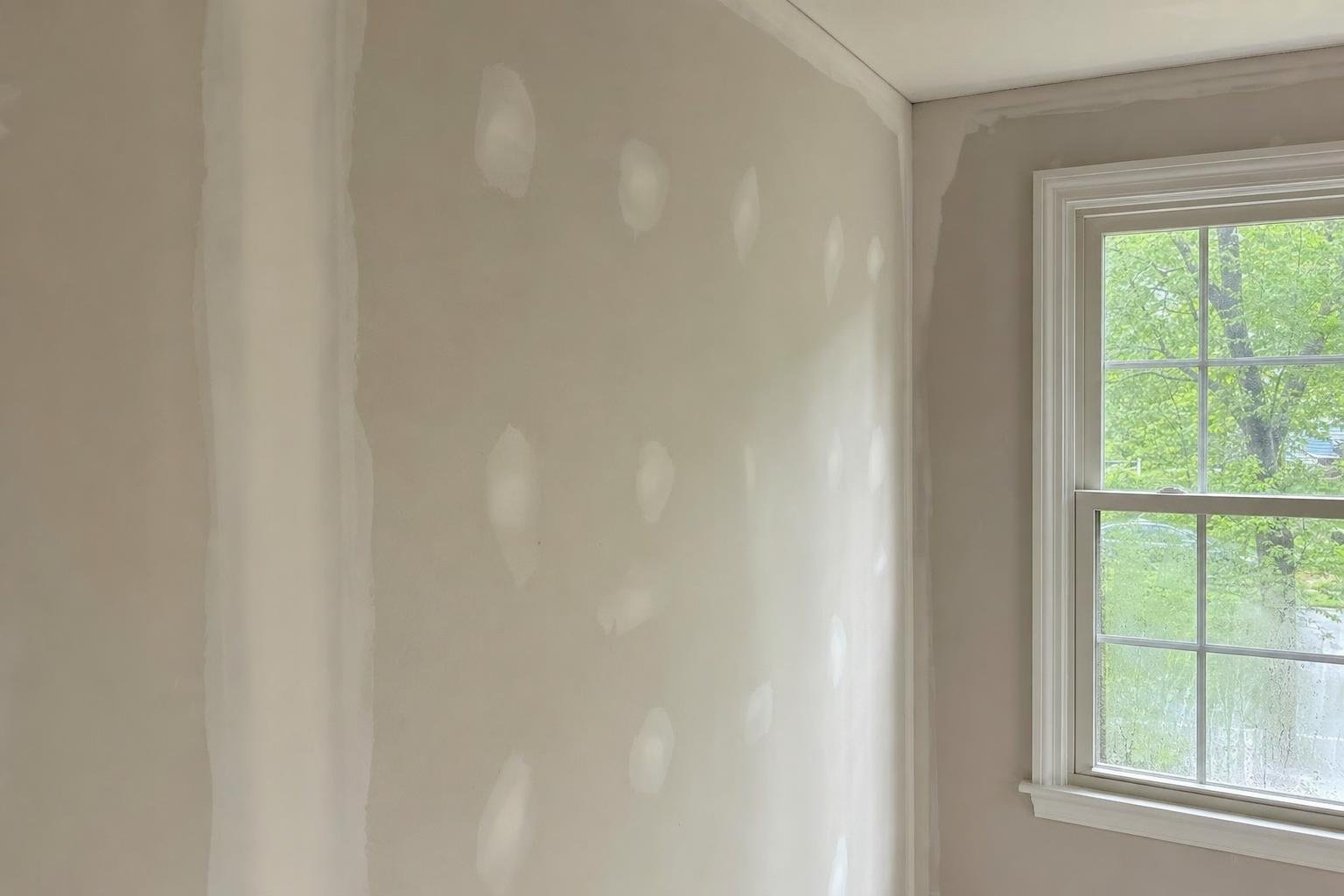
What does the removal itself look like?
We tape off the work area with duct tape first, so dust stays out of the rest of the house. Affected drywall is cut out and goes straight into 6-mil polyethylene disposal bags, sealed before it leaves the room. Nothing gets dragged through your hallway uncovered.
Once the contaminated material is out and the area is dry, we HEPA-vacuum the whole remediation area. Then we wipe down the work area and the path the crew walks in and out with a damp cloth or mop and detergent.
Time on site follows two things: how much board is affected, and how long the framing and cavity take to dry. A single wall is a short job. Several rooms with a slow-drying cavity is not. We give you the schedule after looking at the wall, since drying time can't be guessed from the phone.
Will the smell actually go away?
Usually yes, once the material causing it is gone. The odor comes from mold growing in the wet board, so you can't spray your way past it.
If a smell lingers after removal, something is still holding moisture: framing that hasn't dried, a cavity that hasn't been ventilated, or a leak that's still feeding the area. If the smell comes back, we look for the water again rather than treat the symptom.
What does it cost, and what moves the number?
Professional drywall mold removal runs from about $1,000 to $20,000. Four things move the number: your location, how much drywall is affected, how many rooms are involved, and how severe the growth is.
A stained patch in one room sits near the bottom. Multiple rooms, wet walls that need extended drying, and board that's deteriorated through its full thickness push toward the top. Tell us the room count and what you see, and we can place a job like yours in that range. The firm figure comes after a look at the wall.
Every line of the price is written out before the first cut. If we open the wall and find more than we could see from outside, we stop and talk to you before the scope changes, not after.
What happens when you call?
A person from our crew answers. We'll ask where the damage is, how long you've noticed it, whether there's been a leak or flood, and how many rooms it touches. There's no charge for the call and nothing to sign or book while we're talking.
From there we set a time to look at the wall and write up the job.
Inside the Job
For work like this, the work covers:
- Choose PPE and containment based on the affected area and exposure risk; EPA lists an N95 respirator, gloves, and goggles as minimum protection for small affected areas.
- For extensive contamination, isolate the work area with sealed plastic sheeting, shut off and seal nearby ventilation openings, and maintain negative pressure with a HEPA-filtered exhaust fan.