
But you can't tell by looking whether the mold is actually gone. Post-remediation clearance testing is how you find out. We're independent of whoever did the work. We sample the air and the surfaces, send what we collect to a lab, and read the results against what we see and smell in the space. If you're still deciding whether to close up walls, lay new insulation or move back in, call us first. You'll get a written report, not a verbal okay.
Why not just take the remediator's word that it's clean?
Because the company that did the work is also the one grading it. That isn't an accusation, it's just a built-in conflict. We have no stake in the outcome, so our report is a second set of eyes you can hand to anyone who needs proof the job was finished. If something was missed, you have documentation to take back to the remediator instead of a hunch.
This work can lead into mold inspection and testing. Looking for mold remediation in Ann Arbor? See every service we offer.
Related reading: Does Homeowners Insurance Cover Mold Remediation? · The Mold Remediation Timeline: What Each Step Involves
What do you actually test?
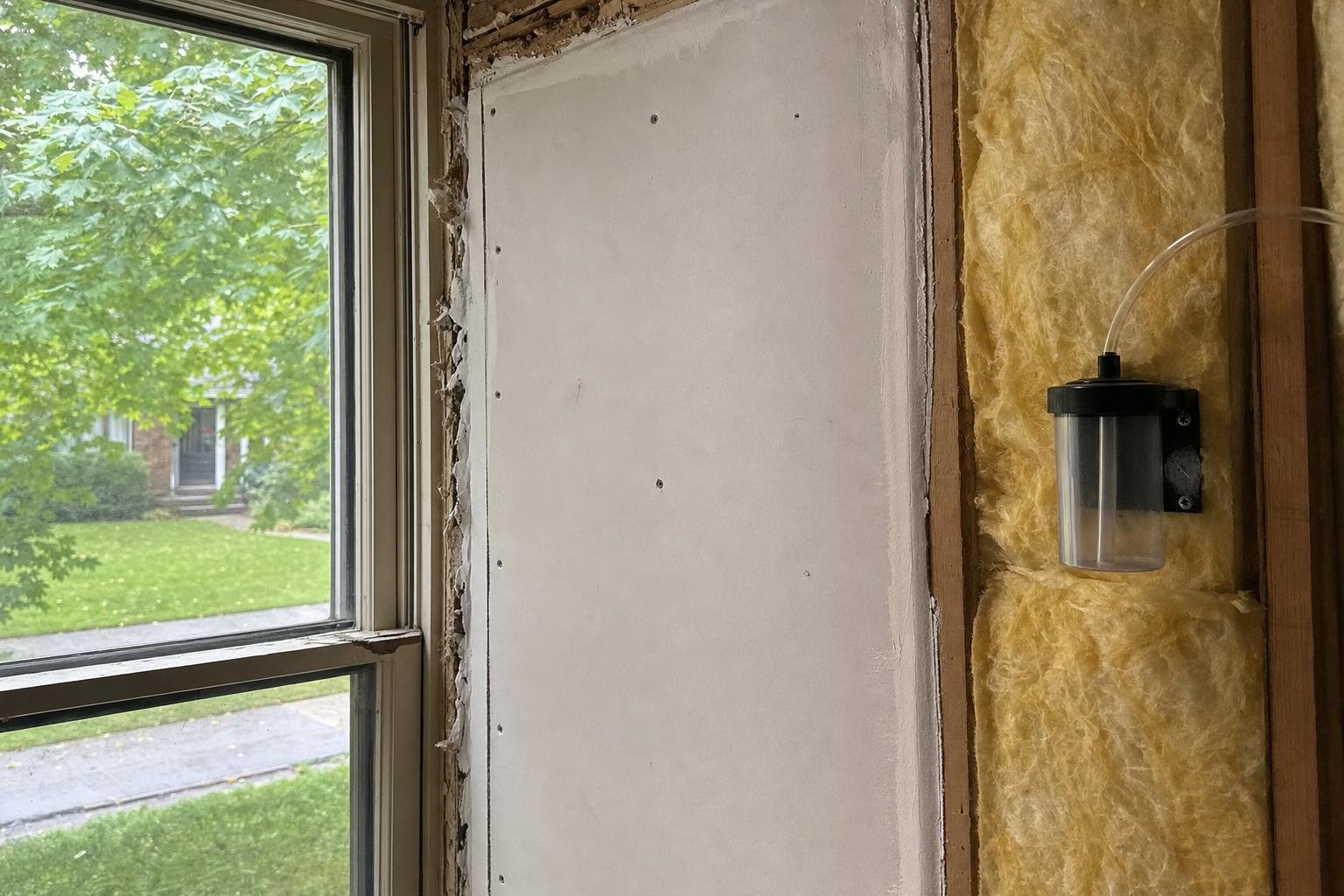
We start with a visual and sensory inspection, meaning we look at the remediated areas and note any smell. Then we take two kinds of samples. An inertial-impaction air sampler collects what's airborne. Surface tape-lift or swab kits collect from the materials themselves. Everything goes to a laboratory. Air results alone don't establish clearance, so we never call a job cleared on air numbers by themselves. We read the lab findings next to what we saw in the space.
What will the report tell me?
It tells you where we sampled, what the conditions were on the day, what the lab results were, and whether any further action is needed. Conditions matter in Ann Arbor, where January lows average about 19 °F and July highs about 84 °F, so we record them. If the space clears, the report says so. If it doesn't, the report names the spots that need another pass, so the remediator knows where to go back to.
What does clearance testing cost?
Independent post-remediation verification for one or two remediated areas runs $200 to $600. Cost follows the number of areas you had remediated: one small area costs less than two. Over the phone you'll get the typical range for your situation, and the exact price is set after we've seen the job. It covers the sampling, the lab analysis and the written report.
What happens when I call?
You tell us what was remediated and where, and how many areas were treated. If you have the remediator's paperwork, mention it. If you don't, that's fine. We'll give you the range, and you'll know what a visit involves. Nothing gets committed on that call beyond whether you want a visit scheduled. At the visit we inspect, sample and send everything to the lab, and the written report follows with the results.
When don't you need this test yet?
If the remediation hasn't happened, wait. You need the work done first, and we test once it's complete or close to it. And if you already hold an independent clearance report from another firm, you don't need a second one from us.
Details of the Work
Concretely, steps like these come up:
- Agree on and document the clearance criteria and sampling plan with the remediator before verification begins.
- Have an independent indoor environmental professional perform the verification after remediation; conduct it before containment barriers are dismantled when the project protocol requires that.