
If you're seeing dark patches on the block walls, white growth on stored boxes, or you plan to finish the space and want it done right, the first step is to have us look at it. After the visit you'll have the affected area marked out on paper with a removal price, or a straight answer that the spot doesn't need remediation at all.
How do I know it's mold and not just a damp smell?
A musty smell that returns every summer and never fully clears after airing out is the most common sign. You may also see dark or grayish patches on concrete block, white fuzzy growth on cardboard boxes, or staining on the floor joists overhead. A smell with no visible source usually means growth somewhere you can't see, like behind a finished wall or under stored belongings. Surface mold on a hard wall is a cleaning job. Growth that has worked into drywall or insulation is a bigger one. Smell won't separate the two, so we look at the walls and materials before putting a number on it.
Closely related: crawl space mold remediation. Want mold remediation in Ann Arbor? Our main page lists everything.
Worth a read: The Mold Remediation Timeline: What Each Step Involves · Mold Remediation Cost Breakdown: Materials, Labor and Extras
Why does this basement keep growing mold?
Mold needs moisture, something organic to feed on, and time. A basement supplies the food without trying: dust, cardboard, wood framing, paper. The moisture is the variable. Ann Arbor's hard winter freezes mean the ground around a basement freezes and thaws again and again, and that cycling works on the foundation walls, slab and pipes until ground moisture finds a way through. A leaking water heater, a failed sump pump or a laundry room with no ventilation adds more. Mold doesn't need a flood. Slow, steady dampness is enough for it to settle in before anything shows on the surface.
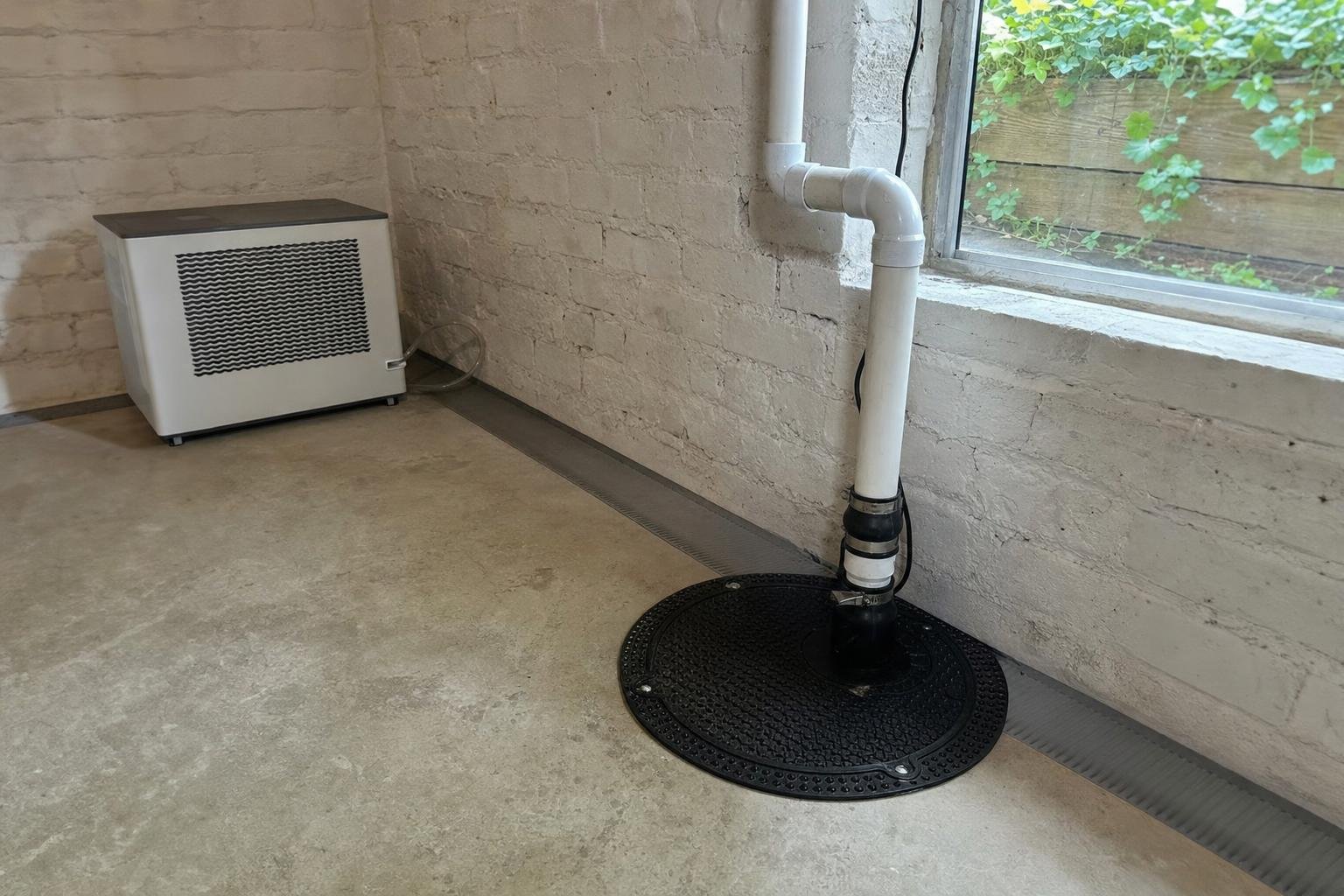
What do you check before quoting the job?
We start with where the moisture is coming from, because cleaning mold off a wall that's still getting wet just means doing the job twice. We map the affected area and check whether growth has reached porous material like drywall or insulation. We also work out whether the source is still active, such as a leak or poor drainage, or was a past problem you've already fixed. If the source is still active, cleaning waits until it's dealt with. Work doesn't start until you've read the findings and the number.
How do you remove basement mold without spreading it?
We contain the work area first, using polyethylene sheeting and duct tape to wall it off from the rest of the house. A HEPA-filtered exhaust fan or air scrubber runs inside so disturbed spores are filtered instead of drifting upstairs. Contaminated debris is sealed in plastic bags inside the contained area before it's carried out, so it never travels through the house open. Hard surfaces that can be saved, including concrete, are scrubbed with water or water and detergent, then dried promptly. A damp wall left behind starts the problem over. What gets scrubbed and what gets removed depends on the material: a hard surface can usually be cleaned, but porous material that has taken in growth usually can't.
What does basement mold remediation cost?
A partial basement job, 100 to 300 square feet, typically runs $1,500 to $6,000. Three things move the number within that range. The first is how much area is affected. The second is whether we can clean the surfaces or have to cut out and remove material. The third is how much containment the layout takes. A finished basement with soffits, a dropped ceiling and built-in storage takes longer to seal off than an open utility space with bare foundation walls.
What happens when I call?
We ask what you've seen and smelled, where in the basement, and whether there's been a leak or water event. From that we tell you whether a visit makes sense. Sometimes the answer is a small surface spot you can watch, or a moisture problem that calls for a plumber or a drainage contractor first, and we'll say so. That call commits you to nothing. If a visit makes sense, we pick a time, walk the basement, and write up what we found. Then you decide.
What the Work Involves
In detail, parts of it look like this:
- Isolate the basement work area with polyethylene sheeting, seal openings as needed, and maintain negative pressure with HEPA-filtered exhaust.
- Wear respiratory, eye, and skin protection while disturbing or removing mold-contaminated materials.