
Running the fan longer won't clear it. It just moves the smell and whatever is causing it through every room. We handle HVAC and air duct mold remediation in Ann Arbor. Call and tell us what you're smelling and when, and we'll give you a ballpark price range right then. After we've been out to see the ducts, you get a written quote with the real price.
Is the smell coming from your ducts or somewhere else?
Check the timing. If the smell shows up when the system is running and fades when the fan is off, the ducts are the likely source. Pull a supply vent cover and shine a flashlight inside. You're looking for dark discoloration on the duct walls or fuzzy growth along the edges of the ductboard. Sometimes you can see it from the register and sometimes you can't, so the smell pattern is the better clue. If the odor stays the same with the fan off, the mold is probably in the basement, crawl space or attic instead, and that's a different job.
See also mold damaged insulation removal. Ready to hire for mold remediation in Ann Arbor? Start with our home page.
More answers: Mold Remediation Cost Breakdown: Materials, Labor and Extras · Does Homeowners Insurance Cover Mold Remediation?
What lets mold grow inside a duct
A duct is dark, closed in and rarely looked at, which is the same setup mold likes anywhere else in the house. Dust collects on the inside surfaces over the years, and that gives mold something to feed on once a little moisture gets in. Ducts that run through attics or crawl spaces are the usual trouble spots, because that's where the surfaces get cold enough for condensation. Ann Arbor gets about 34 inches of precipitation a year, and May is the wettest month at roughly 3.7 inches. A musty smell that starts around then is worth checking before summer humidity piles on.
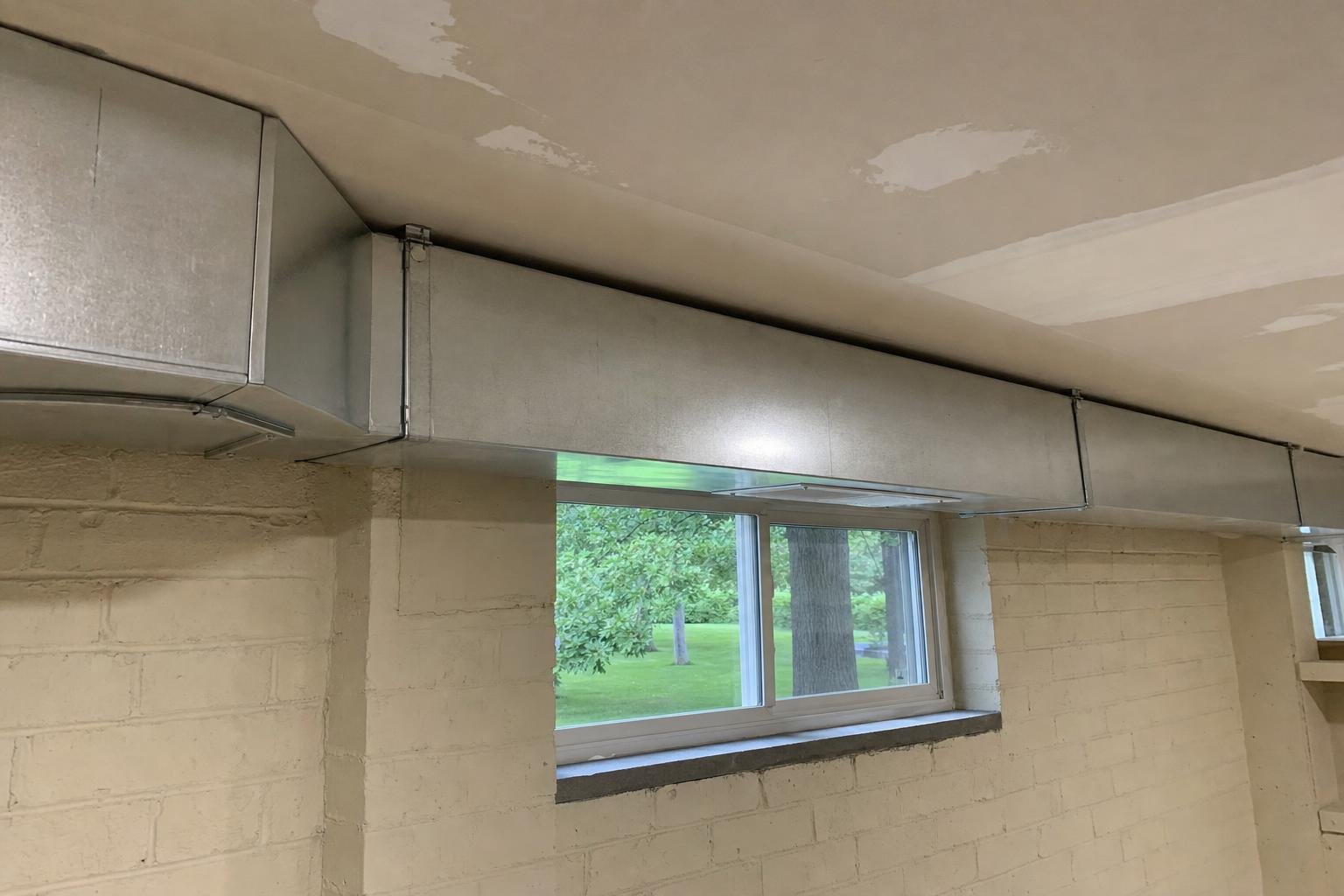
What we look at before we quote the job
We inspect the accessible ductwork and find where the growth is. We also check whether those spots are still getting wet. If they are, scrubbing the duct won't keep the mold from coming back. Sometimes the moisture needs to be fixed by another trade first, and we'll say so. The other thing we're sizing up is how much duct is involved. A short, easy-to-reach run is a smaller job than growth spread through the system, so the price follows what's in your ducts rather than a flat rate.
How we remove mold from ducts without spreading it through your house
We run a negative-pressure HEPA filtration setup, so air is pulled out through HEPA filtration while we work and disturbed spores aren't pushed into your rooms. Before we start, we protect the furnishings near the work area. Then we dislodge the deposits from the duct surfaces with controlled brushing while vacuuming at the same time. The vacuum is either exhausted outdoors or is a HEPA unit. We wear personal protective equipment the whole time. The brushing has to happen on the inside surfaces, because wiping at a register opening won't reach the growth.
What does air duct mold removal cost?
Air duct mold removal typically runs $600 to $2,000. Ask for that range when you phone; the firm price waits until we've looked at your ductwork. The low end is mold confined to a short, accessible run. The price climbs with the length of ductwork involved, how hard the ducts are to reach, and how widespread the growth is. You'll have the final price on paper before we set up the HEPA equipment.
What happens when you call
You describe what you've noticed, where the smell is strongest, and whether it follows the fan. We quote a ballpark and pick a day to come inspect the ducts. The call commits you to nothing beyond a visit time. After we inspect, you'll know what we found, what it takes to fix it and what it costs. If the problem is smaller than you feared, or the real issue is moisture that needs a different trade first, we'll tell you. Call [Business Name] to schedule the duct inspection.
What Goes Into the Work
Spelled out, a few parts of the job:
- Correct the moisture source, including leaks or water damage, and address standing water by ensuring the cooling-coil drain pan slopes toward a free-flowing drain.
- Use a biocide only when appropriate, after cleaning, on uninsulated bare-metal duct areas, and strictly according to its label; do not apply biocides to fiberglass-lined ductwork.